


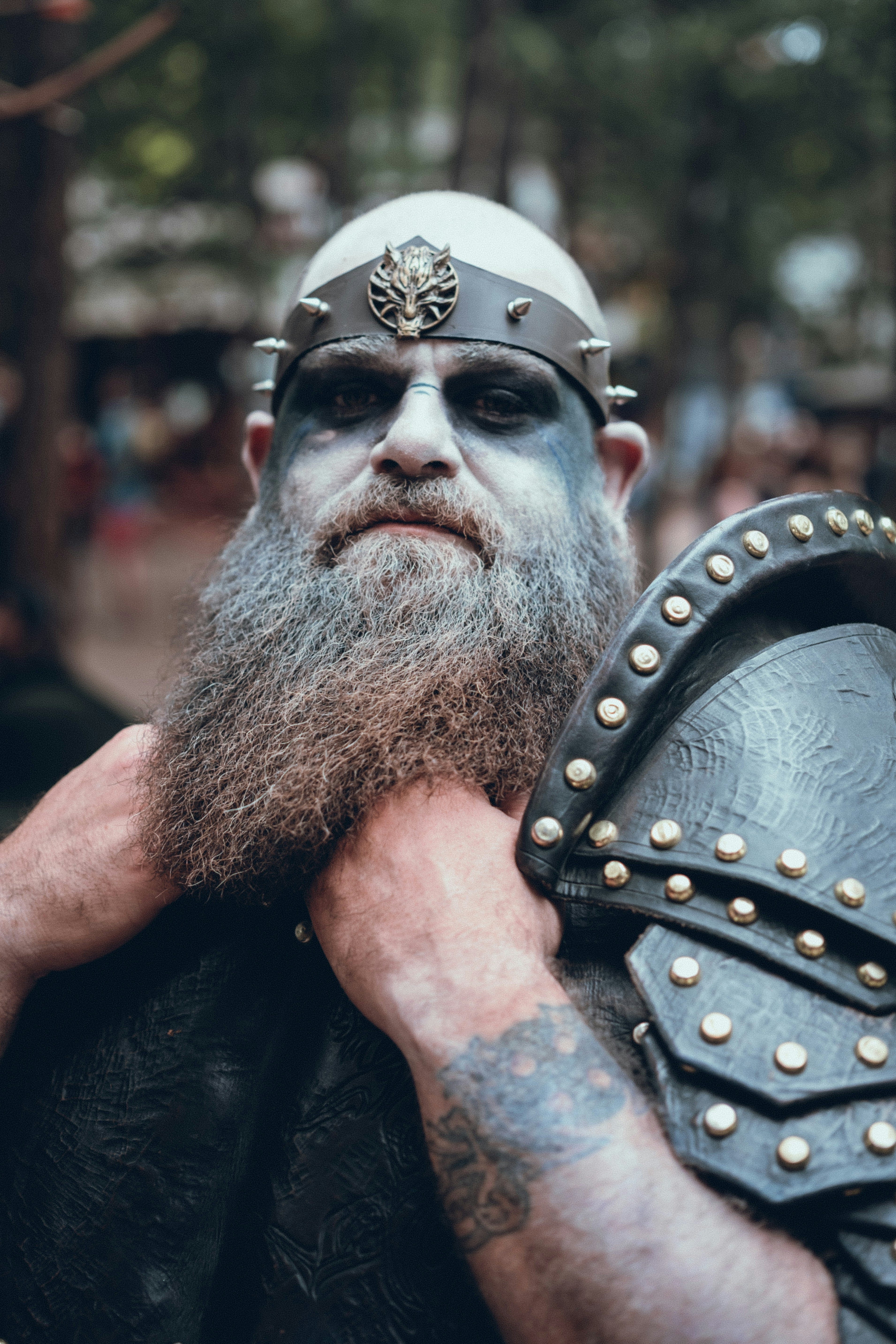
Heroes are something we all need and when they are absent, we are somehow less for it. Reading Robert E. Howard’s Chronicles of Conan the Barbarian, I may have been unjust to a certain resident of the Shire in Middle Earth in dismissing him as a whining little turd. For that thought, Conan the Cimmerian is to be thanked.
While we all like heroes for the most part, there are wildly divergent ideas on what a hero is, exactly. For some, they think of the Marvel and DC universes, peopled with widely varying characters from Superman to The Punisher. For others, sporting people may be heroes. For still more, even business tycoons like Elon Musk could be heroes. This illustrates the need for clarity on what exactly we are thinking of as a “hero” in this article. To start with, the Cambridge Dictionary defines ‘hero’ as “a person who is admired for having done something very brave or having achieved something great.” Christopher Reeve, the first actor to portray Superman back in the late 1970’s and early 1980’s, once said a hero was an ordinary person who did extraordinary things. Clearly, he was not thinking about Superman when he said that. For the sake of this article, I think both definitions are workable and precise enough.
Is Conan the Cimmerian a hero? Conan is certainly brave and performs great deeds. He is well gifted in the arts of combat and womanising, to be sure. He is also fearless against incredibly bad odds, though he tends to be a little more nervous around spiritual entities and those able to work great magic. Conan is a barbarian through and through, and a barbarian who appears very comfortable in his skin. Conan is also a very independent individual and his bravery does not depend on the presence of others. This accords very well to Western, especially United States, ideas of the ruggedly independent male hero.
Conan has also achieved great things. He has wielded power as a king of Aquilonia and even done very well in that position. The Aquilonians seemed to have actually liked him as their king, even though some of the nobles were a little less loyal when the road got rough. Conan has also defeated great enemies and, in doing so, benefited those who have not been able to help themselves. The elephant headed Yag-kosha is a case in point. This pre-Cataclysm being was held prisoner and suffered untold horrors at the hands of the evil Yara. Conan broke into the Tower of the Elephant with less than saintly motives, but was soon to moved to help the captive Yag-kosha and successfully did so. While Conan may not always have the purest of reasons to do something, he usually chooses the path of good when confronted with injustice. According to the Cambridge definition, Conan seems to qualify as a hero.
Bilbo Baggins appears less certain when it comes to being a hero. He has never wielded any sort of power except for one time when he gained possession of the titular ring. Yet, it could be argued the ring held the real power as it continued to subvert Bilbo’s sense of identity and free will. Bilbo also was not very heroic without people around him. He needed his friend from the Shire and a host of others willing to pitch in and help him on his quest to destroy the ring. In fact, using the Cambridge definition, it is Bilbo’s friends who seem more heroic than Bilbo.
When we consider the definition offered by Reeve, things get a little more complicated. Conan is never operating from the position of an ordinary person. From the viewpoint of his physicality, Conan is imposing. His muscled to a ridiculous level, moves like a tiger, and is blindingly quick in his reactions. Even as a mercenary or roving adventurer, it is clear Conan is nothing ordinary. The responses of ordinary people in his world serve to illustrate his extraordinary nature. By Reeve’s definition, Bilbo Baggins seems the more heroic type. He is physically a fraction of the person Conan is, and has nothing of Conan’s bravery or personal confidence. I would imagine Bilbo Baggins would sooner die than walk about naked except for a loin cloth and some leather sandals. Yet, Baggins still agrees to step well beyond his own limitations and embark on a quest into the unknown. He not only makes a choice to risk his own person, but he also goes against the very racial tendencies he has grown up with. That is, hobbits are homebodies. Unlike Conan, Bilbo is more than content being home and has absolutely no desire or need for adventure. Despite these factors of size, tendency and fear, Bilbo the Boringly Ordinary steps beyond himself into the vast gulf of his fears in a way that Conan can never match.
And this makes the hobbit all the more relatable. You might be different, but when I look in the mirror, I see nothing like Conan the Barbarian. I move more like a wallowing walrus than a lion, and I have the reflexes of a doped up sloth. Conan is very much the extraordinary person and for that, he is not as relatable as Bilbo Baggins. This is not a criticism, as Conan’s specialness makes him all the more appealing to readers. We can revel in his skill and skip ahead to catch a glimpse of his prowess and skills. It is exciting stuff to read of the Cimmerian’s exploits and victories, with the deities of his universe pulling him into their schemes and plans.
Yet, if there was ever a character who embodied Western comfort and joy of just being in your home, (recall the phrase A man’s home is his castle) , Bilbo Baggins is it. Homebound to the point of xenophobia, completely uninterested in anything outside the Shire and utterly fearful of the unknown, Baggins is truly the posterchild of the modern Western age. While Tolkien possibly based the hobbits on the English, I would suggest the resemblance runs wider than that. These are qualities share by many Western cultures and people in our time. Many people are fearful and insecure, much as Baggins was when Gandalf suggested he needed to travel. Most people do not wish to be bothered by events that make them uncomfortable, as Baggins did not. Bilbo Baggins is the utter embodiment of the absolutely ordinary. This is no hairy Martin Luther King Jr. This is no small version of Sir Edmund Hillary. And Bilbo is certainly no Muhammed Ali. And it is Biblo’s very averageness, his deep mediocrity, that makes him the hero for the Everyman and Everywoman. It is for this reason, I suggest Bilbo Baggins is even braver than Conan of Cimmeria.
This is not to say Howard was any less of a writer than Tolkien. The contrasts between their heroes is more a contrast of type and purpose. Conan is the Escapist’s Hero. He is the hero in whom we can live vicariously and imagine ourselves performing great feats and swaggering around towns with women swooning and men fearful. Conan takes us outside of our reality and gives us a moment of pure dream-like fantasy in which we get the girl and vanquish the villainous wizard. Bilbo Baggins is the Realist’s Hero. Like us, when confronted by a huge snake in a pitch dark space, Bilbo would probably fill his pants. An rightly so. In Bilbo, anyone who is not the independent, ripped, sword-carrying whirlwind of might and power can find themselves mirrored. Bilbo shares our fears. Conan does not. Bilbo shares our weaknesses. Conan does not. Bilbo shares our inherent failings. Conan does not. For the average Jane and Joe, Bilbo is the hero of the suburbs. He does not offer escape in the sense which Conan does, but rather says we can do great things while being the ordinary, frail people we really are.
For all that, Bilbo Baggins just seems a little better of a hero than Conan for our time when heroes are sadly lacking in any real sense. Current fantasy novels and those of even recent history seem to lack the earthy hero of Baggins’ ilk. They lack this in a couple of ways. First, in the The Riftwar Saga by Raymond E. Feist, we have the protagonist Pug, who starts life as a nobody on the fringe of his society. Yet, as the adventure continues and develops, he becomes a magician of great power. Thereafter, though he is not without challenges, Pug acts from a position of power and confidence. He moves from a Hobbit typology to a Cimmerian template, but one without the ripped six-pack and muscles. Second, in The Song of Fire and Ice by George R. R. Martin, characters seem to have very little in the way of heroic tendency. Eddard Stark is probably the closest GoT has to a hero and, yet, the message is clear. Being a hero embodying any sense of honesty and loyalty is stupid. Eddard got himself killed because he would not compromise his values. Both Conan and Baggins would have faired the same as people of strong values. Even those who were like Stark in early life are shown to have compromised themselves in order to survive. Robert Baratheon is a case in point. A one-time friend and comrade of Stark, he soon became a corrupt, perverted and non-heroic type simply to survive in the capital. In Martin’s books, being a hero is not only dangerous, but it is futile. Power is in the hands of the evil and it is better to keep your head down and keep it attached.
In this sense, heroes in modern fantasy fail readers in an important way. Bilbo Baggins and Conan provide a guideline of what people should do when faced with evil and tyranny. Conan, for all his faults, is someone who still cares about justice, fairness and people’s rights to live as they choose and be free. Baggins is a bit different, as I do not think he much cares about the freedom of the dwarves in the same way as Conan would. However, Baggins is concerned enough to do the right thing and make sure he takes responsibility for his choices. He is loyal to his friends, as Conan is, and he has strong values which may override his culturally imbued concerns and fears. “Heroes,” and I use that term very loosely here, in The Game of Thrones never go beyond themselves or seek to uphold any strong sense of value beyond what is beneficial for them. Apart from the Starks (possibly), most people in the GoT world are basically cock wombles who cannot get over themselves long enough to actually do anything worthwhile. They provide us with no model of being part of something greater than ourselves and upholding the value of doing good just because it is the right thing to do. Bilbo Baggins is a far greater person than John Snow.
To wrap up, we need more heroes of the type of Bilbo Baggins, as well as those in the vein of Conan the Barbarian. We need heroes who step outside themselves and expand their visions of who they are and what their world is as they pursue their goals based on clear value systems worthy of our respect and emulation. We need the ordinary people who perform extraordinary deeds.
You can grab another of my book, NeoTokyo Dead, from all fantastic platforms!
