


Without the divine, you have no basis for law. Laws become merely opinions.
I used to think I was a bit of a clever nut because I had argued the above, with the caveat that perhaps ‘natural law’ was the exception to the claim. It is not really. My point was and is without some sense of the divine beyond the created order and Us (the human race), any morality is based on a set of agreed, and acceptable, opinions. Therefore, to put forward a rather extreme example, one has no real basis for claiming the Holocaust of Nazi Germany was morally wrong beyond it is a matter of opinion based on a set of supposedly agreed rules to which the Third Reich clearly did not subscribe. Everything is up for negotiation unless there is a “transcendent frame” at work (Charles Taylor is the writer from whom I pinched the term).
Then I found out a few people, in particular Philip Rieff and Charles Taylor cited in Carl R. Trueman’s book, had beaten me to it. Such is the hubris I am want to succumb to occasionally.

Carl B. Trueman discusses the work of Rieff and Taylor and draws together a thorough analysis of Western culture as it stands today. The Rise and Triumph of the Modern Self considers how Rieff’s and Taylor’s work contribute to a wider understanding of how Western culture came to be the apparent chaotic mess of competing moral voices it is today and in such a short time.
Trueman places the current trends in culture in a much wider context reaching back centuries, though he limits himself to a selection of key thinkers in more recent centuries. In fact, Trueman says you can even track some elements of our social imagination back to the writings of Saint Paul and Augustine of Hippo, though he himself pulls short of doing that, which he says would render his work unwieldy and massive, but useless. Setting some clear terminological points down as a foundation, Trueman sets out on a tour de force of some of the major contributors whose ideas have developed in the context of technological, economic, and cultural conditions which have shaped aspects of Western culture as it morphes in very short periods of time. Karl Marx, Jean-Jacques Rousseau, Sigmund Freud, and more are placed into a wider stream of thought which covers philosophy, psychology, sociology, literature, and more.
Trueman presents his research in a massively well-referenced form, with notes at the end of each chapter. This is a book where readers can really dive into the endnotes and get some very good pointers towards further reading, if Trueman’s book is not deep enough for you. Trueman also makes the point that he attempts to be fair to the opposing sources he is quoting and aims to have those sources recognisable enough they would recognise themselves if they were to read his book. There is a lot to commend in Trueman’s approach to the subject.
I had first heard about The Rise and Triumph of the Modern Self when I heard Melissa Dougherty talking about her own book Happy Lies: How a Movement You (Probably) Never Heard of Shaped Our Self-Obsessed World. Talking about her research for her book, Dougherty mentions Trueman’s book as the “meatier” source she would recommend to readers. I have found Trueman’s book very accessible, though a couple of really long sentences required multiple readings to parse the meaning a little more.
I am quite new to reading books on the history of Western culture from a Christian perspective rooted in faith. I have long wondered and been confused by the state of Western culture and how it overturned a lot of its own value system in such a short time. The confused, ill-equipped Christian for which Trueman and others are writing was and is me. If you are in a similar, confused state about the society in which you have found yourself, I recommend Trueman’s book as a great starting point to clearing up what we observe and setting it all in the wider historical context.
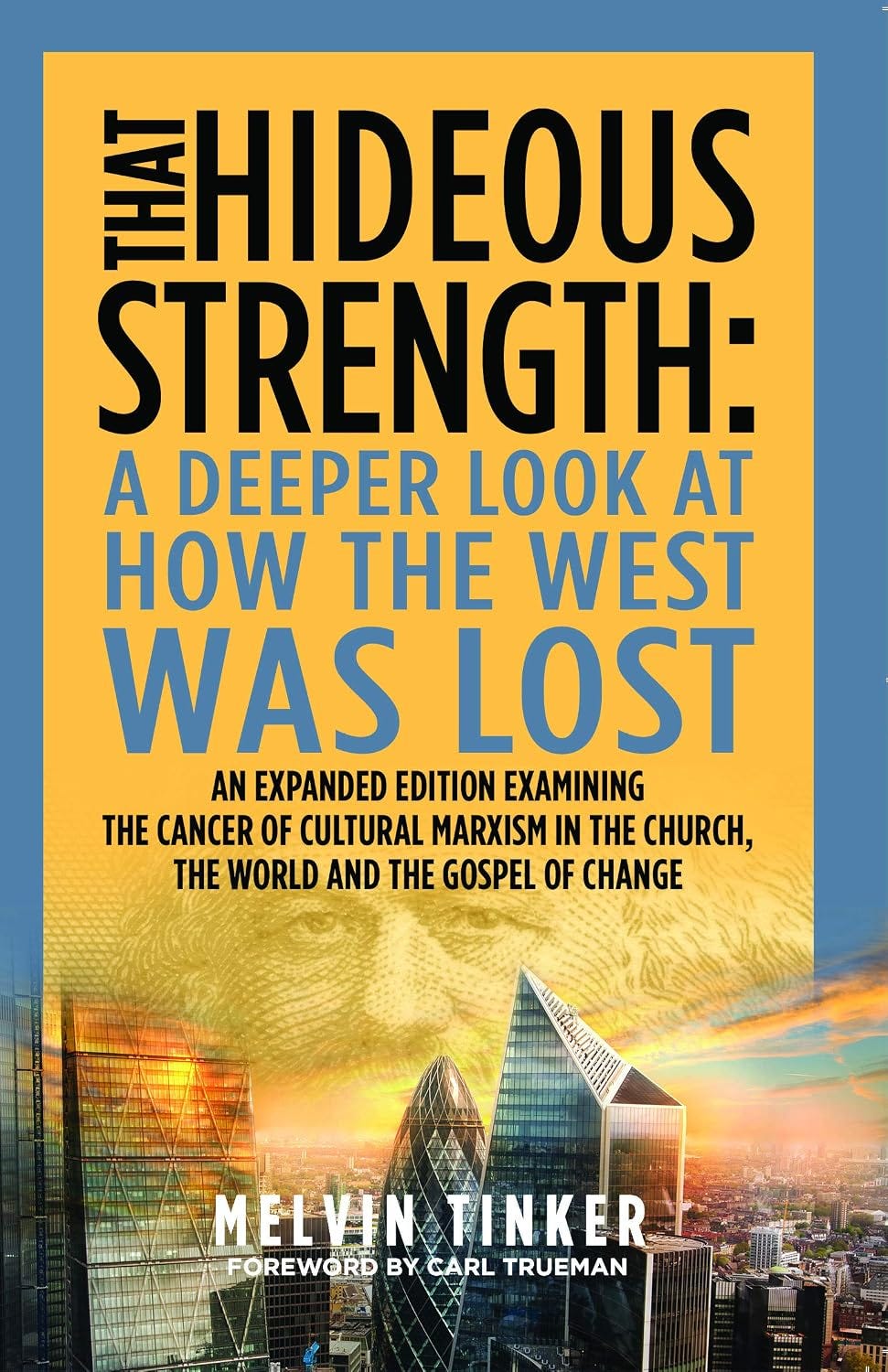
Before I read Trueman’s book, I had read the shorter That Hideous Strength: A Deeper Look at How the West Was Lost by Melvin Tinker. As it happens, Carl Trueman wrote the foreword to Tinker’s book. Tinker focuses on the influence of Neo-Marxist thought while similarly placing the current state of Western culture in a longer historical sequence which touches on some of the points in Trueman’s work.
For a briefer dip into the pool of how we got where we are, Tinker’s book is very good and clear. It is short (only about two hundred pages) but it will whet the appetite a little. The Triumph of the Modern Self will take you much deeper into the rabbit hole. Both of these books are a solid starting point for the perplexed Christian and just about anyone else who is asking what the hell.
You can grab my book, NeoTokyo Dead, from all fantastic platforms!
