


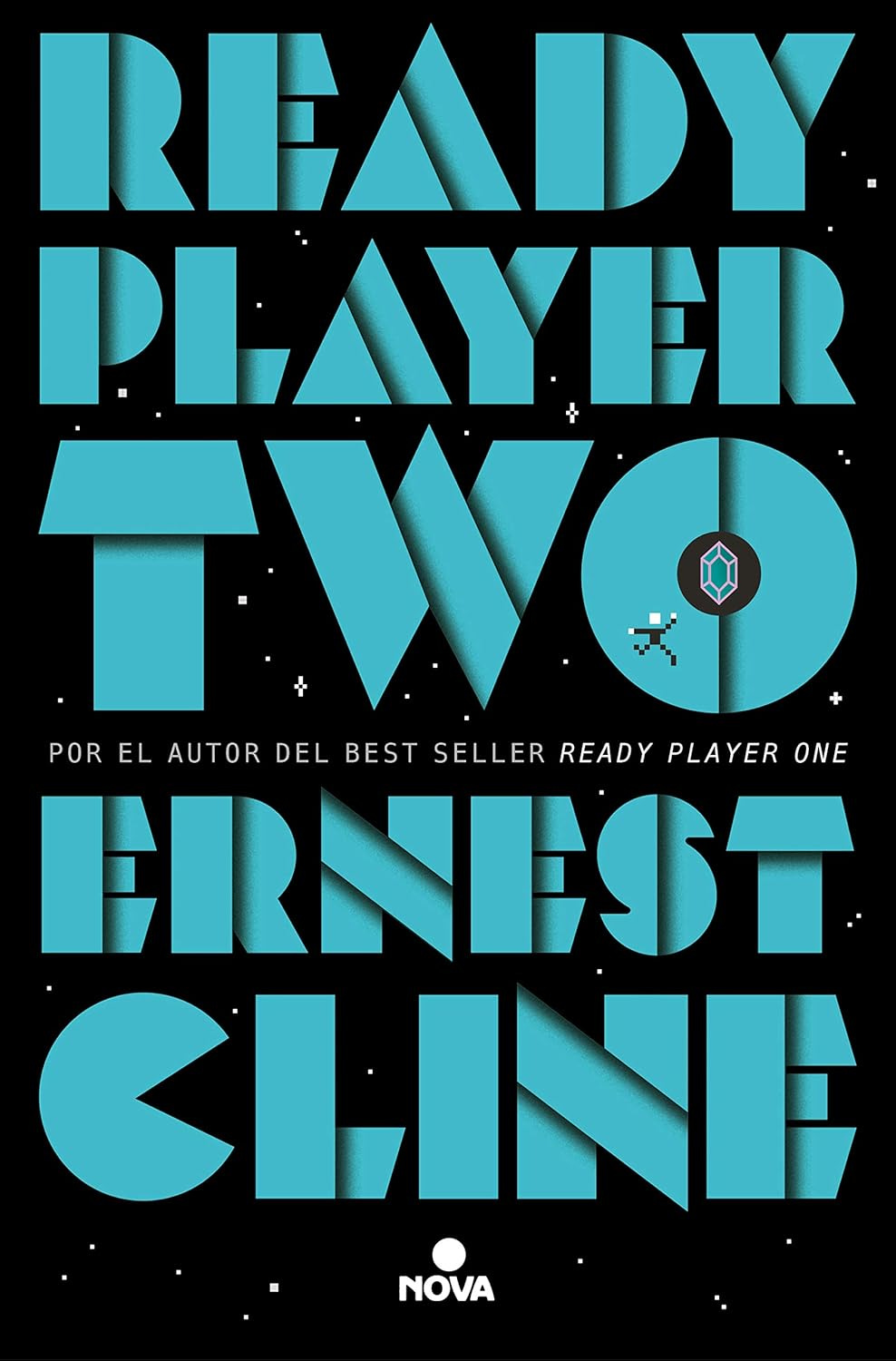
Ernest Cline’s Ready Player One (RP1), which I read after I saw the movie, was a cyberpunk roller-coaster with a veritable cascade of 1980’s references and trivia. That alone made the book much more interesting than the movie, as I walked away with a lot of little insights into the 1980’s pop culture scene and much-loved movies, music, and books about which I had no idea. RP1 was a cool read, which set me up with some pretty high expectations going into Ready Player Two (RP2).
I bought the second book a couple of years ago and, just after deciding to read it, I bumped into a reviewer who utterly slated it. I am, if nothing else, easily influenced, so reading a couple of f-bombs in a really short review which also mentioned something akin to “money-grab” and “repetition,” my heart honestly sank. Despite my expectations being crushed on the rocks of commercial reality, as viewed by the florally-languaged reviewer, I went into RP2 with an open mind and I was ready to enjoy another adventure with Wade Watts.
But, damn it. That reviewer was right.
RP2 is an object lesson in what I fervently hope never to do as an author, and a cautionary tale for all of us. Especially those who enjoy wild success on one their books. RP2 is replete with more trivia about 1980’s culture and even a little from the 1990’s, covering everything from games to children’s TV. And that is what killed it for me, by the time I reached page 222 and the world of Halycodonia. There is only so much trivia I can handle. Now, admittedly, I have a very low level of trivia tolerance. After all, I despise the game Trivial Pursuit with a passion reserved only for thieves, bullies, and Education Review Office functionaries. So this fact does not predispose me to endless trivia drip feeds. However, what made RP1 charming and fun, in part, has become the mill stone around the reader’s neck. It drags the book into pointlessness and the trivia adds nothing to the narrative.
A much bigger problem with RP2, which the above-mentioned review pointed out so colourfully, is the basic plot is another treasure-hunt. The Easter egg has gone, and now it’s the Seven Shards of the Siren, the alliteration belying the mediocrity of an essentially regurgitated premise. I was willing to run with it for awhile. There are hunts, and then there are hunts. RP2 falls into repeated pattern of teleport-hunt-complete task-teleport again, broken only by brief instances of “bad news” being introduced, or something else to pause the hunt, and a supposed set of other clues left by Og Morrow. The secondary plot of Og Morrow’s disappearance at the hands Anorak, (think CLU in Tron), almost rescues RP2 from the dungeon of despair. Almost.
And this where I think some are right in their harsh comments about RP2. It was not written, I think, with anything more to add to the narrative finished in RP1. It was written to capitalise on the popularity of the first book and milk a bit more success out of the series. On a business level, it makes sense.
But when you compare the RP1 and RP2 books to other series, the faults become glaring. In the Dune books, each book forms a new stage of the characters’ development and the movement of the plot is into new territory, so to speak. The narrative develops from the book before and leads the reader to the book following. That is because the story was always intended to span a large number of books from the get go, or at the very least, in the very early stages of the writing process. Lord of the Rings, another series, is a second case in point. The narrative expands from the first book, taking the characters into new situations and new tensions. There is a narrative arch which ranges from the first page of book one to the last page of book three. Tolkien and Herbert had also done the world building to back up their narratives, and it shows.
Unlike Lord of the Rings and Dune, RP1 would have been an excellent story even without RP2. The latter instalment feels like it has been tacked onto the end like a poorly sewn Taylor Swift patch on a perfectly fine denim jacket covered in Rancid and Sex Pistols patches and metal studs. In my opinion, this is where the whole point of RP2 has been lost, if ever it had a point beyond capitalising on the previous book’s popularity in the first place.
Sometimes, not publishing something is better for an existing book. And this where we, as authors, need to consider things carefully. I am not implying Ernest Cline did not deeply weigh up the pros and cons of publishing RP2. Of course, he did, and he probably had a whole tonne of other stakeholders saying it was a great idea. However, I think, in some cases, it is worth refraining from putting something out there if it is not going to contribute to an existing narrative you have already established in any meaningful way.
It is possible to keep adding to narratives in meaningful ways over vast spans of books. Robert Jordan’s Wheel of Time, and Randolph Lalonde’s Spinward Fringe are examples of great narratives continued over prodigious amounts of output. There are many more authors who have done the same. But they have done it for the right reasons: their characters’ stories were not finished yet.
You can grab another of my book, NeoTokyo Dead, from all fantastic platforms! And there are no sequels. Yet!

I really enjoyed the first book a lot more than the movie, but haven't read the Second. It just felt like the story had been told to me, and I'm guessing from your review I might have been right. First book really was a lot of fun though.